Cut the cost of complexity with intelligent IT automation


Key takeaways
- Intelligent automation dramatically improves IT efficiency.
Organizations attribute a 31% reduction in IT costs to intelligent automation. - Transformation and growth are now top IT priorities.
67% of the average enterprise IT budget is now dedicated to improving IT and the business—rather than keeping the lights on—up from just 33% in 2023. - AI makes IT more valuable to the business.
Organizations that have broadly implemented generative AI in their IT processes attribute a 90% ROI to digital transformation. - AIOps and automation puts IT ahead of the hackers.
Two in three highly automated companies leveraging AIOps platforms have reduced their attack surface and threat risk and improved proactive mitigation by driving consistency and standardization at scale.
Automate, innovate, elevate
IT is the powerhouse of the modern enterprise, dictating how fast it can move—and how much value it can deliver. But getting more from technology in an AI-first landscape requires overcoming persistent obstacles.
IT complexity and opaque workflows obscure opportunities. Disconnected data silos and outdated technology inhibit solutions. Few organizations are reaching their full potential.
What distinguishes the organizations with the most advanced IT automation from their peers? They see higher revenue growth, lower costs, better cybersecurity, and amplified business value. Breakthrough analysis from the IBM Institute for Business Value (IBM IBV) reveals that highly automated organizations—those that have made the most progress with embedding AI in IT—have greater integration, deeper visibility, better data governance, and more advanced cloud adoption.
These findings came from our extensive analysis of benchmarking data provided by IT leaders—including CIOs, CTOs, and vice presidents or directors of IT—from 680 companies across 18 industries and 21 countries. We assessed IT automation platforms and capabilities across processes, infrastructure, and security.
We found that highly automated organizations attribute a 10% increase in revenue to their digital transformation efforts. They also attribute a 28% reduction in IT costs, a 16% reduction in time-to-market for new IT products and services, and a 36% reduction in downtime costs from cybersecurity incidents.
Intelligent IT automation uses AI and machine learning to deliver workflows that integrate seamlessly across the enterprise and act autonomously based on what they’ve learned.
These outcomes are fueled by the flywheel created by intelligent IT automation and digital transformation—including data and application modernization and migration, hybrid multicloud management, mainframe modernization, and process automation. AI agents are also driving results by autonomously handling a broad range of tasks, from incident handling to cloud provisioning to compliance management.
Think of it this way: The right data, cloud, and AI strategies enable intelligent IT automation at scale, which powers IT and business transformation. Transformation supports updated data, cloud, and AI strategies, which position the organization to capture new value. This flywheel yields broad benefits, giving teams the tools and time they need to develop innovative products and services, tap into new technologies, and drive revenue growth.
The end goal is to infuse generative AI across enterprise IT, using AI agents to enable autonomous operations at scale. But progress only accelerates if organizations successfully manage complexity across the board.
IT transformation accelerates business innovation and growth
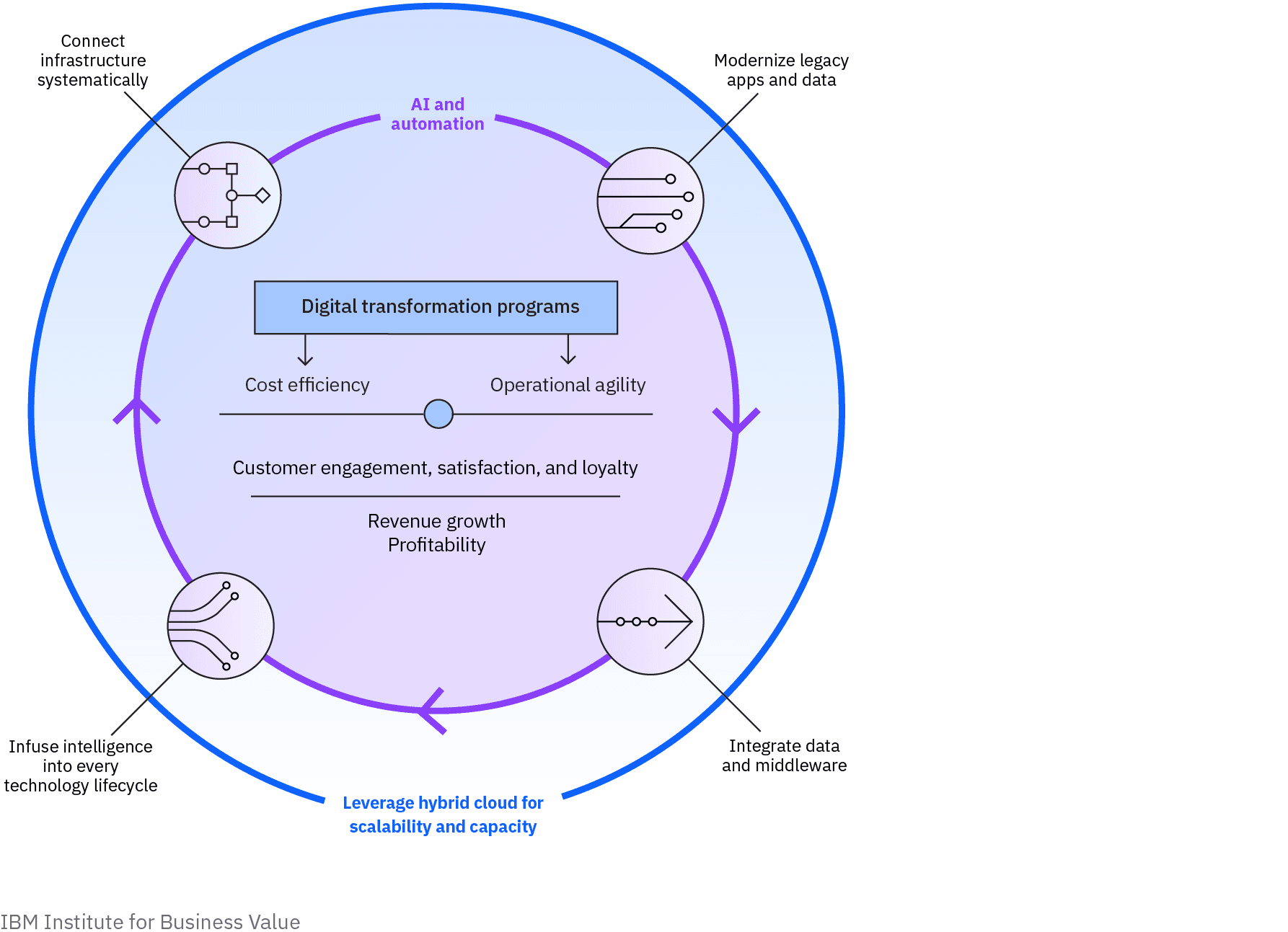
That means that the entire IT estate—not just the AI portfolio—plays a role in building a more profitable and productive AI-powered enterprise. In this report, we’ll answer three big questions about what it takes to unlock the true value of intelligent IT automation—and drive measurable business results:
- How can reducing complexity in the IT function cut costs and drive growth?
- What does it take to build effective end-to-end workflows?
- How can optimizing operations increase the value of AI-powered IT transformation?
Perspective
By the numbers: The business value of intelligent IT automation
What’s the return on AI-powered digital transformation? The answer to this simple question is dizzyingly complex.
That’s because the business impact of digital transformation varies widely depending on industry, organizational and technological maturity, competitive dynamics, and the specific scope of initiatives undertaken. To provide a clearer view, we’ve developed an illustrative example that estimates potential outcomes using the average improvements on key business metrics attributed to digital transformation initiatives over the last two years by highly automated companies.
The dollar figures outlined here represent the potential top- and bottom-line value a highly automated company could deliver annually by coupling digital transformation with intelligent IT automation. When creating a value case, organizations must tailor assumptions to their industry, region, size, technological maturity, market dynamics, and regulatory environment to ensure the results reflect their unique circumstances.
For further context, a detailed appendix in the downloadable PDF outlines the range of improvement achieved by companies across industries to reflect variability, as well as the full set of assumptions we used as the basis of our analysis.
The following calculations assume an average company generates $10 billion in annual revenue and spends 8% of revenue ($800 million) on IT.
Revenue growth
- 10% increase in revenue = $1 billion in additional revenue
Example: A retail organization uses intelligent IT systems to optimize inventory allocation and ensure seamless e-commerce functionality. - 16% reduction in time to market = $400 million in accelerated revenue
Example: A manufacturing electronics company automates IT workflows for supply chain monitoring and integration, enabling faster delivery of new product lines.
Cost savings
- 22% reduction in operational costs = $1.6 billion in savings
Example: A telecommunications provider automates IT network monitoring and predictive maintenance, minimizing disruptions and improving operational efficiency. - 28% reduction in IT costs = $224 million in savings
Example: A software company automates routine IT support and maintenance tasks, freeing up resources for higher-value development projects.
Cost avoidance
- 31% reduction in downtime costs from high-severity IT incidents = $37 million avoided
Example: An electric power utility automates incident response workflows and leverages Infrastructure as Code (IaC), minimizing grid disruptions during peak demand periods. - 36% reduction in downtime costs from cybersecurity incidents = $72 million avoided
Example: A banking institution automates IT workflows for vulnerability patching and compliance reporting, minimizing disruptions to financial services.
Section 1
The unseen consequences of complexity
IT spending is soaring—up 50% between 2023 and 2025—rising from 6% of revenue to 9%. That’s partly due to increased AI investments, but even more because the focus of IT has shifted: 67% of the average enterprise IT budget is now dedicated to improving or transforming IT and the business—rather than keeping the lights on—up from just 33% in 2023.
IT budgets are shifting toward business transformation.
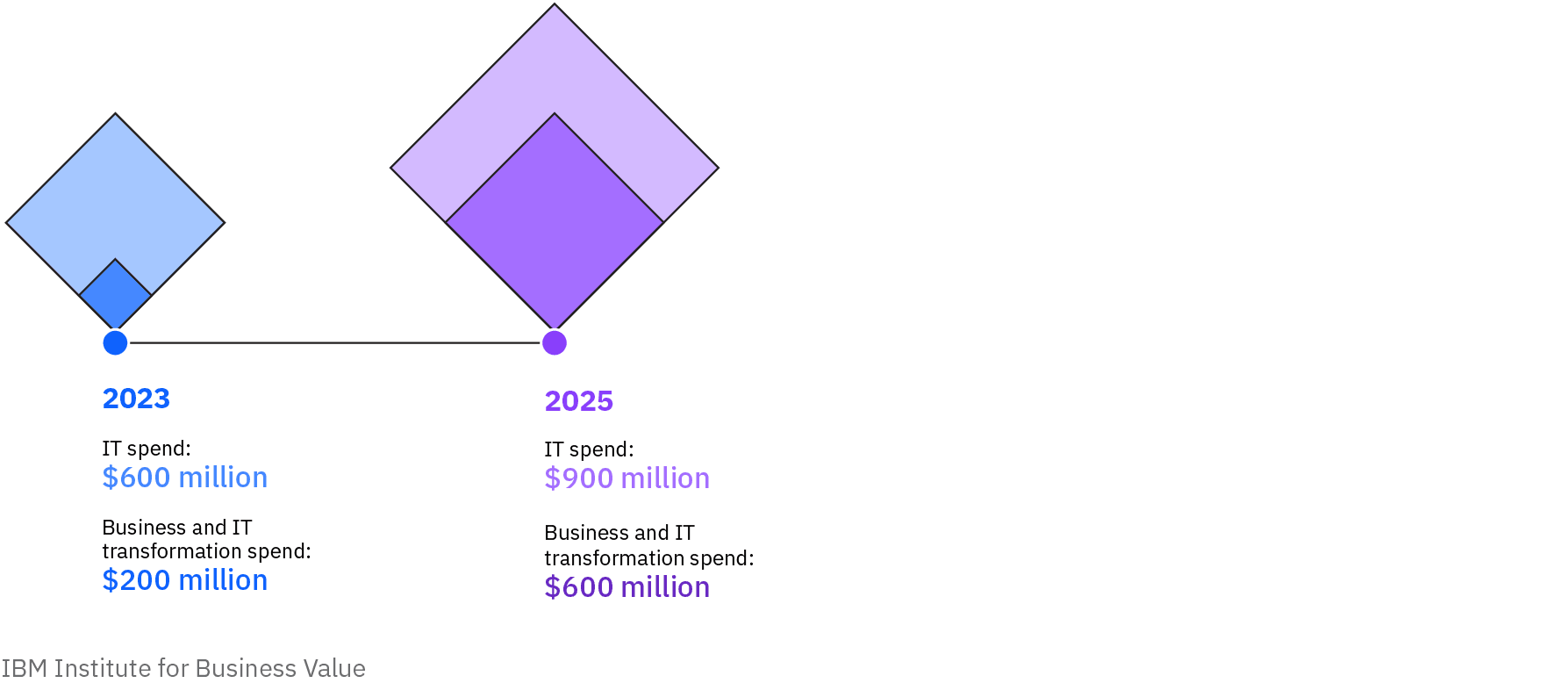
This reallocation represents dramatic progress. But still, 33% of IT budgets are devoted to maintaining existing systems. Persistent challenges, such as shadow IT and technical debt, prevent IT departments from achieving their full potential.
Shadow IT, or the software, cloud services, and tools purchased directly by business units without IT oversight, represents 24% of total IT budgets. For a $10 billion company that spends 8% of revenue on IT, this represents $192 million annually. As IT budgets continue to grow, shadow IT spending is expected to increase proportionally, creating additional inefficiencies, security risks, and challenges for centralized IT management.
What about technical debt? Outdated systems, poor code quality, and deferred maintenance continues to accumulate. According to Forrester, 75% of technology decision-makers say technical debt will rise to a moderate or high level of severity by 2026 due to the complexity that AI solutions add to IT estates.
Our research reveals that highly automated organizations have been able to address this complexity more effectively than peers. When compared with organizations that have less advanced AI capabilities, they spend less on IT without compromising on business outcomes: 6.8% of revenue compared to 8% for less automated organizations. These highly automated companies employ only 90 IT staff per $1 billion in revenue, versus 140 for less automated peers. In short, embedding AI in IT helps organizations do more with less.
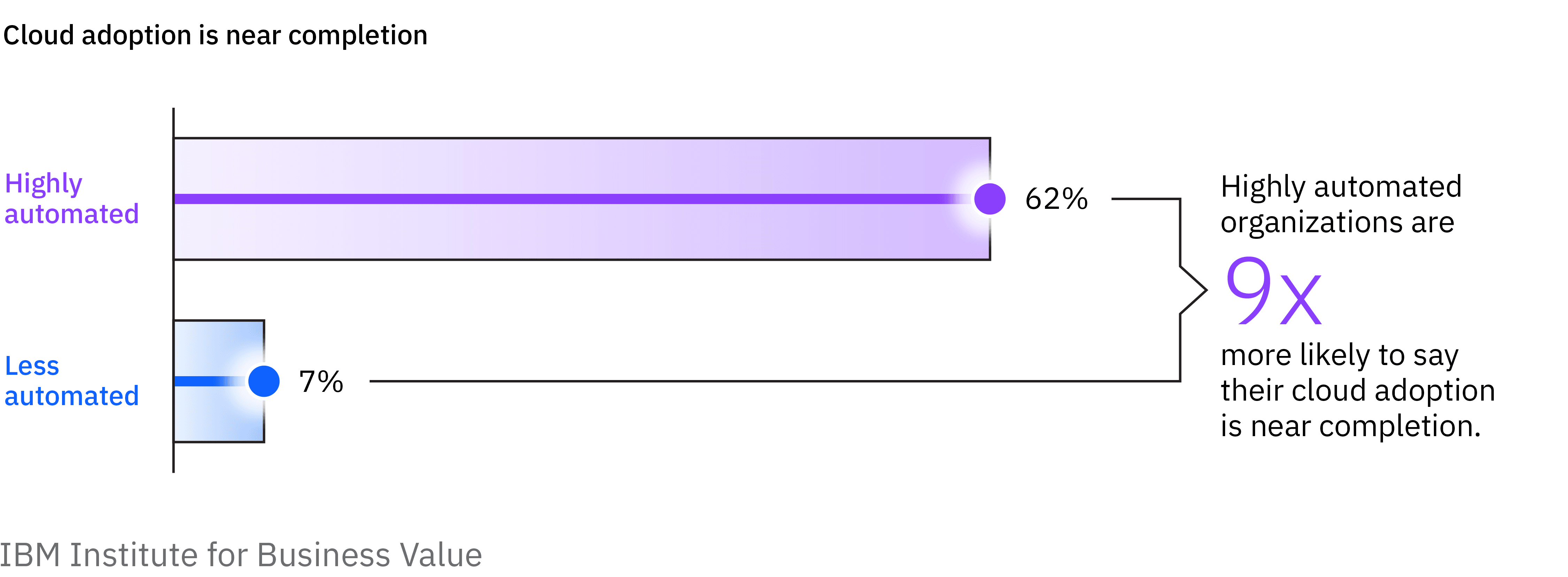
A key enabler of this progress is hybrid cloud adoption, which serves as the backbone for AI in IT operations (AIOps) platforms, intelligent IT automation initiatives, and broader transformation efforts. Highly automated organizations are almost nine times more likely to have completed more than 75% of their cloud migration than less automated organizations.
Mature cloud capabilities allow highly automated organizations to see where their resources could be used more effectively—and make changes quickly.
Hybrid cloud environments allow organizations to combine technologies, architectures, and methodologies best suited for what they want to achieve, focusing on outcomes, designing for integration, and adapting to change. But deploying hybrid cloud at scale in a consistent, repeatable manner is paramount. Without disciplined execution, large-scale deployment can leave security gaps and lead to exponential cloud waste via custom deployments. Distilling discipline in DevOps and Infrastructure as Code (IaC) is critical to fully leverage hybrid cloud at scale.
Mature cloud capabilities allow highly automated organizations to see where their resources could be used more effectively—including where AI agents could improve performance—and make changes quickly. Real-time visibility lets them measure the impact of each shift, iterate as needed, and unravel the costly complexity that inhibits growth. Organizations can then turn visibility into action with automated testing that self-optimizes cloud estates to avoid bottlenecks and optimize savings across the board.
Highly automated organizations operate in mature hybrid cloud environments
Case study
Al Rajhi Capital, one of the leading financial services companies in the Middle East, faced an urgent need to modernize its infrastructure in an increasingly digital-first world. As competition grew and customer expectations shifted, the company encountered infrastructure challenges in the pursuit of enhancing its digital offerings.
The main issue was Al Rajhi Capital’s fragmented technology landscape. Over the last two decades, the business had accumulated siloed systems with varying approaches and technologies, making it difficult to integrate services, adapt to market changes, and scale to meet the company’s ambition.
"To continue growing and to meet the expectations of modern investors, we needed to break down these silos and offer a seamless, unified experience,” says Khalid Abu El-Soud, Lead Solution Architect at Al Rajhi Capital. “We understood that the company had to embark on a journey to unify its platforms, enhance operational efficiency, and deliver a superior customer experience."
Al Rajhi Capital implemented a cloud-based platform to create a modernized middleware that unified the disparate systems. This enabled the development of a new digital SuperApp, as it is called internally, that aggregates all investment services—brokerage, asset management, and investment banking—into a unified, user-friendly interface. The integration layer, coupled with event streaming capabilities, facilitated seamless communication between diverse systems and external data points.
"Through our app, we now offer exclusive, innovative services that set us apart from the competition,” says Chief Information Officer Ahmad Al Rifai. “Customers can access real-time information from different bourses, such as the Tadāwul and others around the world, enabling them to explore new investment opportunities instantly, diversify their portfolios, and maximize returns."
Business volume has surged by 40% on the brokerage side since the launch of the app and customer onboarding for asset management has increased by 1,000%.
"IBM's technology allowed us to innovate at an unprecedented pace. International customer growth also saw a dramatic rise,” explains Ghassan Lama, Vice President and Head of IT DevOps. “In the last year, we went from being the number two brokerage firm in Saudi Arabia to number one. At the same time, we went from being the sixth largest mutual fund in the country to the second largest. Our growth has been exceptional.”
Section 2
Delivering on the promise of end-to-end workflows
In a perfect world, intelligent automation would create seamless, self-directed workflows that require minimal human intervention. IT systems would autonomously identify, resolve, and optimize processes in real time. AI agents would handle most routine tasks, freeing employees to focus on strategic innovation and transformative business growth.
While AI agents are quickly coming of age, most organizations are still far from reaching this ideal state. However, highly automated organizations are closer than their peers. Our benchmarking data show that 89% of highly automated organizations have implemented generative AI or are optimizing it at scale within their IT processes, compared with only 15% of less automated organizations.
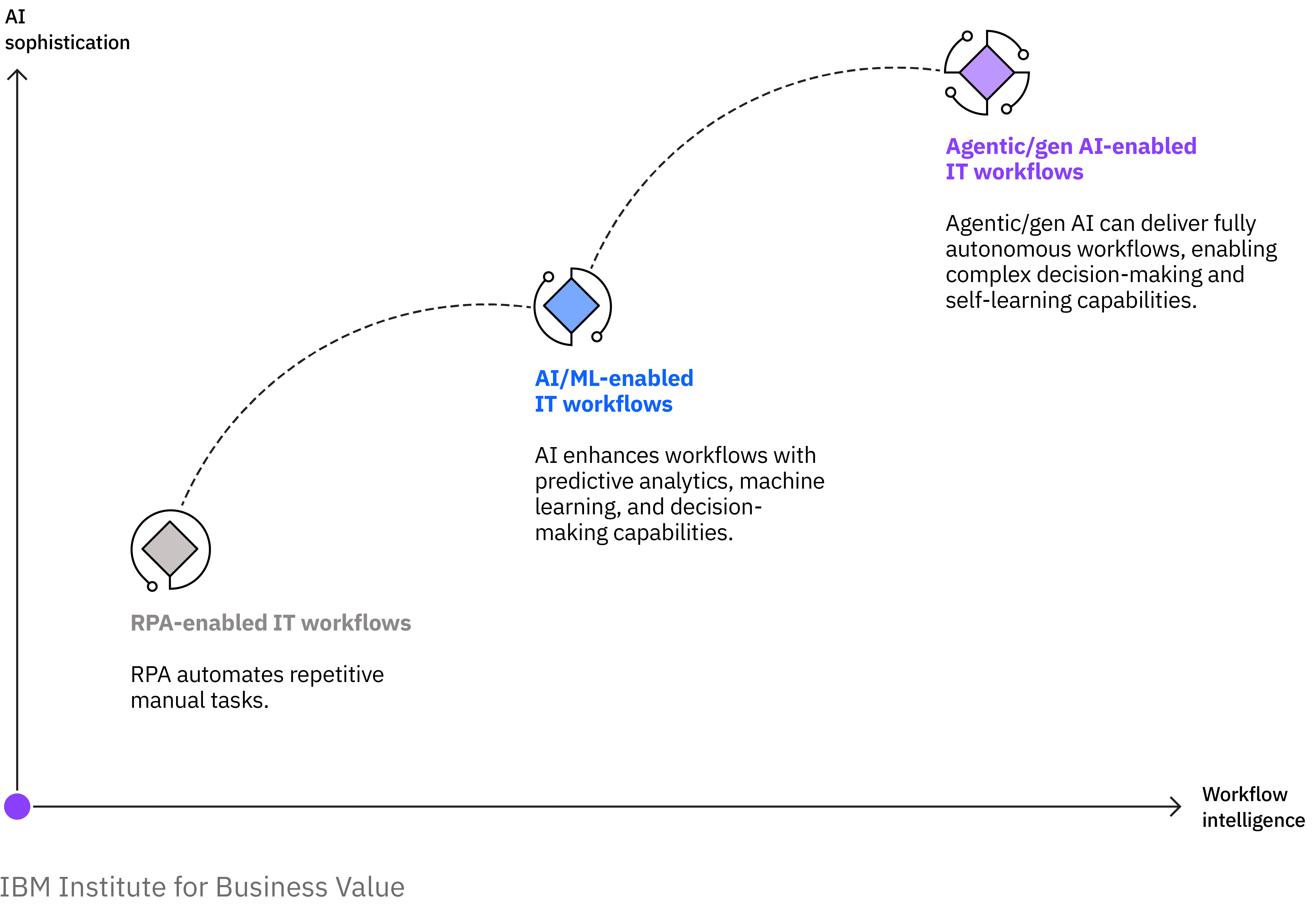
One speed bump on the path to agentic AI-enabled workflows is the fact that intelligent IT automation happens in waves. The evolution from robotic process automation (RPA) to AI-enabled workflows to agentic AI depends on industry, organizational readiness, technological infrastructure, and the availability of structured, accessible, high-quality proprietary data that can be used to train the underlying models. Improvements might be made in one area, then fed back into the system to accelerate progress in another. It’s not always a linear progression.
For example, an organization might use RPA for back-office tasks while piloting AI-enabled workflows for customer insights. Or an industry could leapfrog stages due to specific needs or market pressures. The boundaries between these stages can blur, as some RPA tools now incorporate machine learning or AI features.
The evolution of intelligent IT workflows
This journey often amplifies integration and interoperability challenges. Half of organizations, for example, say they have disconnected technology that limits how they can use their data.
To address this, highly automated businesses are more likely to use AIOps platforms that standardize processes, eliminate redundancies, and streamline data flows. These platforms give IT leaders the visibility they need to cut costs, increase operational tempo, strengthen security posture—and drive revenue growth.
Highly automated companies have more advanced AI-enabled platform operations
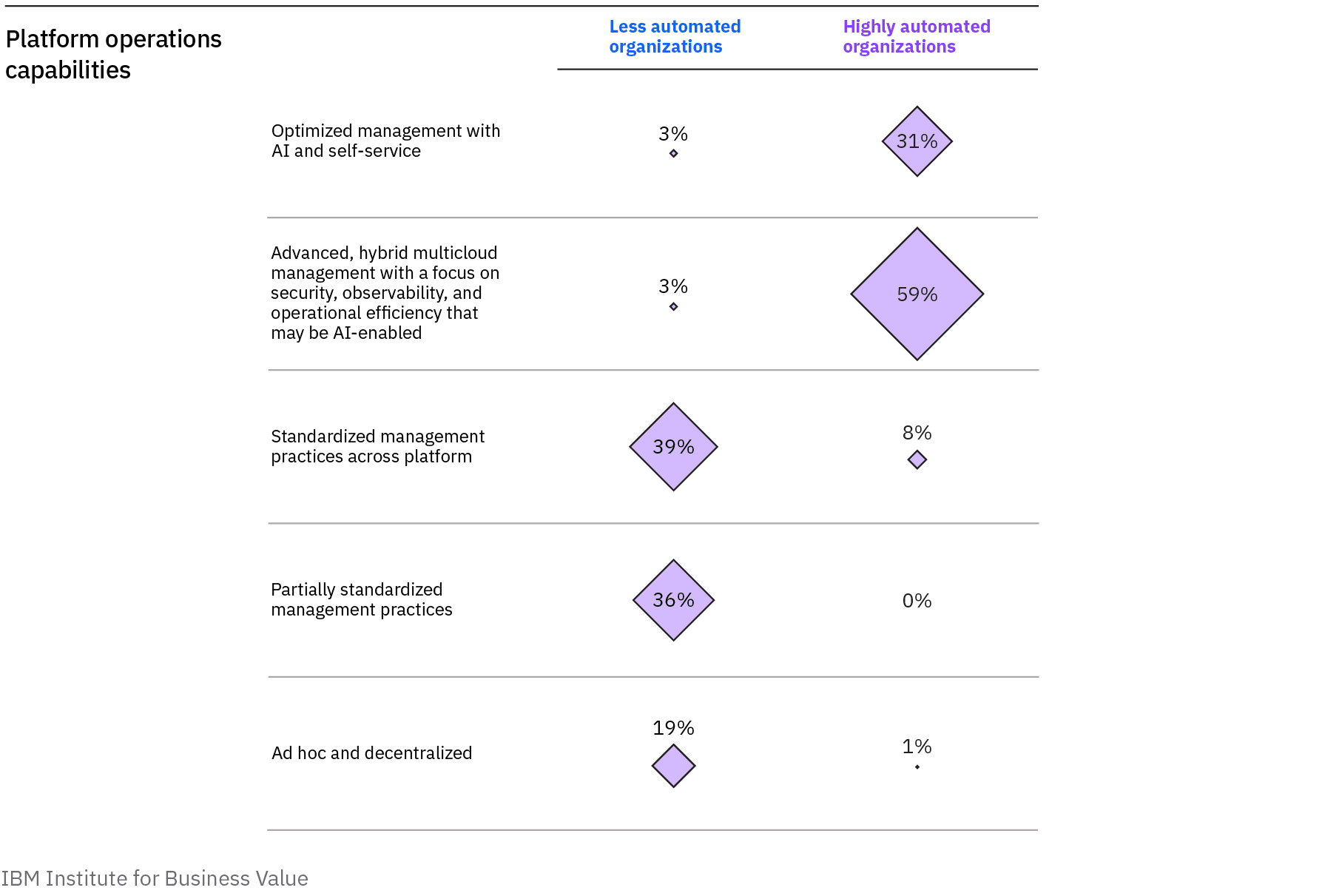
For highly automated organizations, initiatives that connect key workflows have helped increase the automation of transactional processes by 26% over the past two years. These organizations also cite a 22% reduction in operational costs due to IT and business transformation initiatives that include automation and AI. As AI agents handle more tasks autonomously, these costs could continue to fall.
Executives say data is one of the top barriers hindering agentic AI adoption today. That’s because AI systems, including AI agents, are dependent on data. The quality of the data used to train and tune AI models determines the quality of the outputs that AI agents rely on to perform tasks. Organizations that modernize their data infrastructure —clearly identifying what should be accessible to AI and what should not—are better positioned to achieve agentic AI-enabled workflows driven by agentic intelligence.
For example, many highly automated organizations that have implemented generative AI in infrastructure management are delivering value through cloud resource optimization (66%) and automated provisioning and deprovisioning (53%), compared with 6% and 7% of less automated companies, respectively. This value comes in many forms, including reduced manual intervention, operational waste, and downtime risks.
In terms of cybersecurity, two in three highly automated companies that use AIOps platforms say they have reduced their attack surface and threat risk and improved proactive mitigation capabilities as a result of digital transformation, automation, and AI. Only 40% of less automated peers say the same.
Intelligent automation makes digital transformation more valuable.
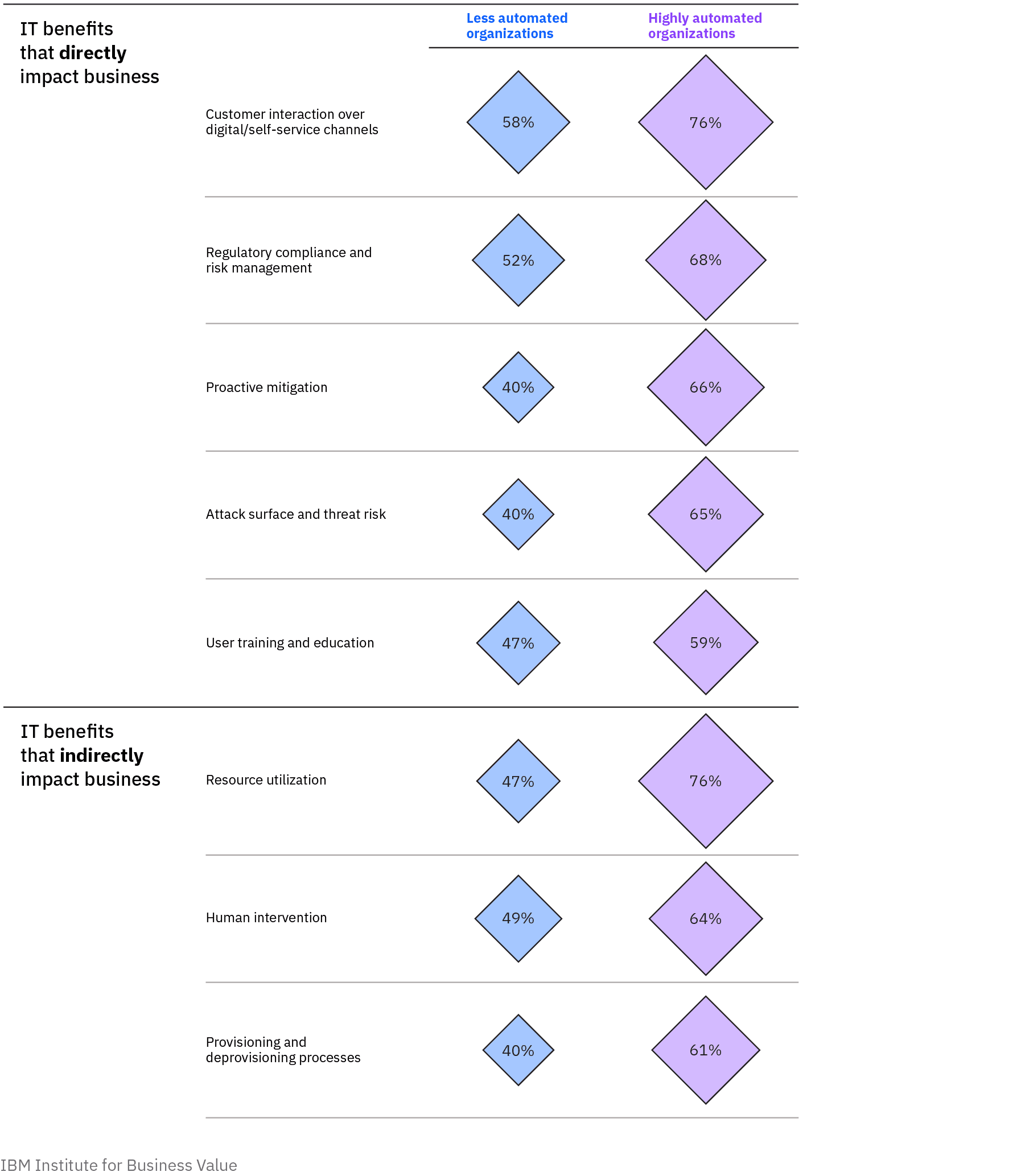
The list of benefits goes on, from customer convenience to streamlined compliance to targeted training. These results are essential to realizing enterprise AI ambitions—and they’re only made possible by the interconnectedness that intelligent IT automation provides.
Case study
Intentional hybrid cloud adoption leads to successful transformation and continuous innovation. With this objective in mind, the Chief Information Officer (CIO) at IBM initiated an effort to comprehensively analyze business costs and spending optimization.
This initiative aimed to reallocate the IT budget toward transforming the hybrid cloud environment. Previously, the CIO organization relied on multiple data sources and tools to get better visibility into how resources aligned to initiatives, objectives, and key results. The organization pulled ledger data and could tie out with great accuracy but lacked the overall finance, IT, and business view.
To make the right decisions, the CIO needed information and details to invest in high-priority initiatives, such as application modernization, rather than investing in stranded assets and lower priority applications.
The challenge called for a solution that could provide insights into IBM’s $2.5 billion IT stack and help address the following:
- Lack of alignment between IT and business goals
- Lack of IT spending transparency to make impactful decisions
- Opaque total cost of ownership (TCO) to run applications and on-premises data centers
- Public cloud sprawl and increased transformation costs
- Non-optimized IT spend
To address these issues the CIO organization elected to use the technology business management (TBM) model—a framework that offers lenses into different views and creates a common language amongst those views.
The journey started in 2021 with a proof of concept (POC). The initial scope included $1.5 billion of IT cost. The POC results provided justification to expand the scope and include the remaining $1 billion of IT cost to deliver a global view of the CIO IT cost.
The cost and consumption transparency provided by the TBM model has enabled the identification of key optimization opportunities. IBM evaluated every aspect of its spend across business units and shared services, with a focus on eliminating complexity and leveraging automation and AI. Insights from TCO data have helped rationalize the CIO portfolio and allowed leaders to make more informed decisions about applications criticality, consumption, and spend. It has also helped them reinvest in transformation initiatives and establish performance optimization targets.
“Focus on progress over perfection,” says Christine Shortell, VP, CIO IT Strategy and Planning and Identity Services, IBM. “The key is having transparency on the data so you can improve its quality.”
Section 3
Optimize operations to get more from AI-powered IT
AI-powered IT delivers the greatest value when it operates at scale. Our benchmarking data reveal that highly automated organizations—those that have fully implemented generative AI in their IT processes—report a 90% ROI attributed to enterprise-level digital transformation over the past two years. Less automated organizations deliver ROI at the project or business unit level, but don’t have the capabilities required to deliver these returns at enterprise scale.
Mature technical capabilities allow highly automated organizations to deliver ROI at enterprise scale. They enable the intelligent end-to-end workflows that make automation more efficient and wide-reaching. But that’s only the beginning. The business impact of AI in IT is multiplied when enterprises pull the right operational levers. Using advanced methodologies and tools, such as DevSecOps, site reliability engineering (SRE), and agile frameworks to optimize IT operations and application development helps drive scalability, reliability, and agility.
Highly automated companies are more likely to leverage these tools and methods, which embed security, enable iterative development, and help ensure systems are both robust and adaptable—driving significant performance improvements. Less automated companies are more likely to be focused on practices such as design thinking and cross-functional, self-directed teams, emphasizing user-centric solutions and collaboration to establish a culture of innovation and lay the groundwork for broader automation efforts.
Partnerships are another crucial operational lever. Fostering better collaboration between finance and IT helps leaders distill more business value for AI-powered IT transformation. Our data show that finance teams in highly automated organizations are almost three times more likely to support enterprise-wide generative AI adoption and far more likely to analyze the outcomes of digital investments to optimize future initiatives.
AI-powered IT transformation helps finance teams make more informed investment decisions.
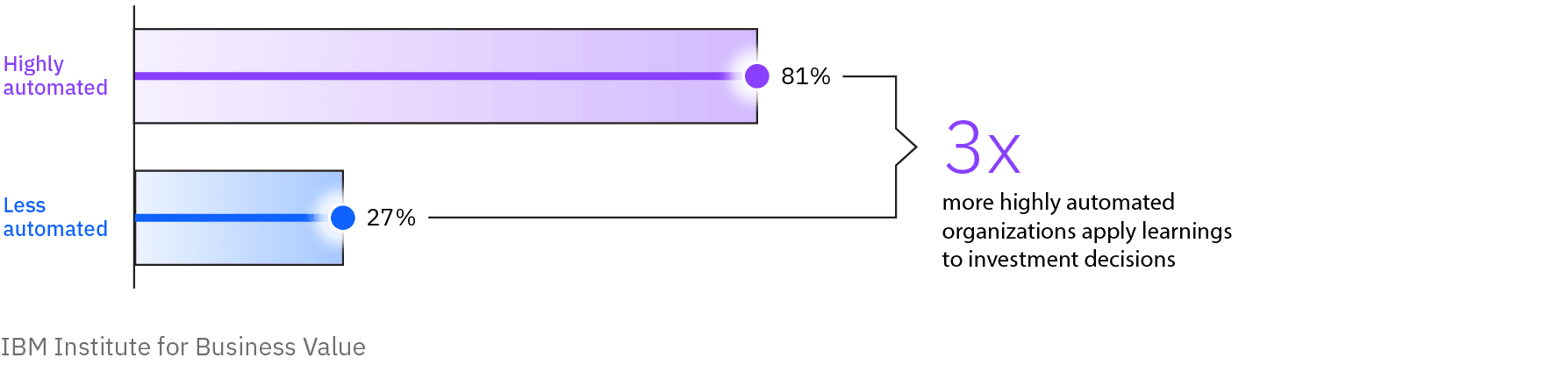
By taking a data-driven approach to investment analysis, finance teams can make more informed decisions about how to allocate resources, prioritize initiatives, and optimize investments for greater impact. Analyzing the outcomes of digital investments also helps finance teams identify and mitigate potential risks and challenges that could stymie transformation initiatives.
Unlocking the full potential of AI in IT requires understanding the complex interdependence of cloud, IT automation, data, and AI. Cloud computing provides the scalable infrastructure needed for AI deployment, while IT automation helps ensure efficient and reliable integration of AI models into business processes. Generative AI, trained on high-quality data, drives innovation and enhances productivity. When leveraged together, these technologies can advance digital transformation, evolve intelligent IT workflows, and create a virtuous cycle that propels organizations toward greater agility, speed, and long-term value creation.
Action guide
What to do
To get greater business value from IT spend, achieve AI ambitions, and make intelligent IT automation a reality, organizations should focus on four priorities: modernizing legacy applications and data, connecting infrastructure systematically, integrating data and middleware, and infusing intelligence into every technology lifecycle.
Modernize legacy applications and data
- Align modernization efforts with business objectives. Segregate applications and data portfolios into tiers of value and criticality to determine whether they should be simplified, automated, or eliminated. Allocate a portion of IT budget to proactively reduce technical debt.
- Use DevSecOps and agile frameworks to automate application lifecycle management. Implement continuous integration (CI) and continuous delivery/deployment (CD) platforms and integrate security scanning tools at key stages of development. Simulate upgrades and automate safer transitions with agentic AI.
- Continuously improve data quality. Establish processes to assess, cleanse, and categorize data based on relevance and accuracy. Automate data cleansing and transformation workflows to eliminate biases and ensure data usability for AI training and decision-making.
- Integrate IT workflows into business modernization efforts. Identify dependencies between applications and data in different environments. Use agentic AI to monitor, adapt, and optimize legacy workflows autonomously.
Connect infrastructure systematically
- Automate infrastructure management tasks, such as provisioning and capacity planning, using Infrastructure as Code (IaC) tools. Leverage agentic AI to dynamically predict resource needs, optimize provisioning, and adjust configurations in real time.
- Enable consistent governance across hybrid environments by deploying unified management platforms and configuring role-based access controls.
- Embed security automation into workflows with vulnerability scanning and compliance reporting.
- Monitor infrastructure health using observability tools. Increase data visibility and transparency by deploying monitoring agents, setting up dashboards, and configuring alert thresholds for critical issues.
Integrate data and middleware
- Standardize critical processes and optimize data flows. Prioritize high-impact business workflows. Map current data flows and create reusable workflow templates, leveraging agentic AI to uncover inefficiencies, detect patterns, and identify additional optimization opportunities.
- Enable secure data access across teams to inform insights. Define role-based access matrices and implement identity federation across systems.
- Align integration strategies with enterprise goals using FinOps tools. Track all IT spend using technology business management practices, create dashboards, and establish monthly cost review meetings with stakeholders.
- Use integration platforms to harmonize processes and improve visibility. Leverage hybrid integration platforms (iPaaS) to integrate workflows and processes, utilizing APIs, API gateways for standardized access, and event integration methods.
Infuse intelligence into every technology lifecycle
- Embed generative AI to automate workflows and drive innovation. Deploy pre-trained generative AI models, integrate them into existing workflows, and monitor their performance to ensure alignment with business goals.
- Reskill IT teams to manage intelligent workflows effectively. Conduct skills gap analyses and create role-based learning paths for AI and automation.
- Collaborate with leaders to strategically scale AI. Develop actionable roadmaps that prioritize investments in AI projects aligned with long-term business goals, focusing on measurable outcomes such as cost savings, revenue growth, or enhanced customer experiences.
- Optimize costs and reinvest savings into AI-driven transformation initiatives. Deploy technology and business management practices and FinOps tools with granular reporting capabilities and compare performance against industry benchmarks. Track savings and reinvest them into intelligent initiatives.
Meet the authors
Varun Bijlani, Global Managing Partner, Solutions & Delivery, IBM ConsultingTodd Kathan, Vice President, Automation Platform, IBM US
Mostafa Zafer, Vice President, Automation, IBM MEA
Meenakshi Srinivasan, Senior Partner, Offering and Global Practice Leader for DevSecOps, AIOps, and IT Automation, IBM Consulting
Minoru Aoki, Client Partner, IBM Consulting
Jacob Dencik, Ph.D, Research Director, IBM Institute for Business Value
Lisa-Giane Fisher, Global Benchmarking Research Leader and MEA Leader, IBM Institute for Business Value
Download report translations
Originally published 31 October 2025