
Key takeaways:
- IBM Quantum Nighthawk r2 uses independent, high-speed qubit reset to execute 100,000+ circuits per second—up to 25x higher circuit throughput than IBM Quantum Heron.
- Active qubit reset lowers initialization error by around 25x while preserving Heron-class gate fidelity and neighbor-safe operation.
- IBM Quantum Nighthawk r2 combines 120 programmable qubits, 218 couplers, and 120 reset elements for a total of 458 physical quantum elements.
- Mid-circuit reset and dynamic circuits make Nighthawk r2 a powerful platform for quantum error correction and fault-tolerant quantum computing research.
- Nighthawk r2 delivers accurate results on circuits containing 7,500+ gates, an important 2026 milestone on the IBM Quantum Roadmap.
Ready for more Nighthawk r2? Explore it on IBM Quantum Platform or register for our 10 Sept webinar, "Quantum computing performance in practice."
From the first demonstrations of quantum advantage to a new modular architecture for cryogenic systems, there have been many important advances in quantum computing this year. With IBM Quantum Nighthawk r2, now available on IBM Quantum Platform, that progress continues.
Nighthawk r2 is IBM’s fastest quantum processor to date. With 120 programmable qubits and a groundbreaking high-speed qubit reset architecture, it’s capable of executing over 100,000 circuits per second—25x the circuit throughput of today’s IBM Quantum Heron fleet. Additionally, the processor has already demonstrated accurate observable estimation on circuits containing more than 7,500 gates, achieving a major 2026 milestone on the IBM Quantum Roadmap.
As discussed in a recent post on quantum hardware metrics, IBM evaluates quantum hardware across three fundamental dimensions: scale, quality, and speed. Nighthawk r2 maintains the scale of its r1 predecessor while delivering targeted improvements in quality, but its most significant advance comes in speed. Let’s take a closer look at how IBM researchers brought that improvement to life.
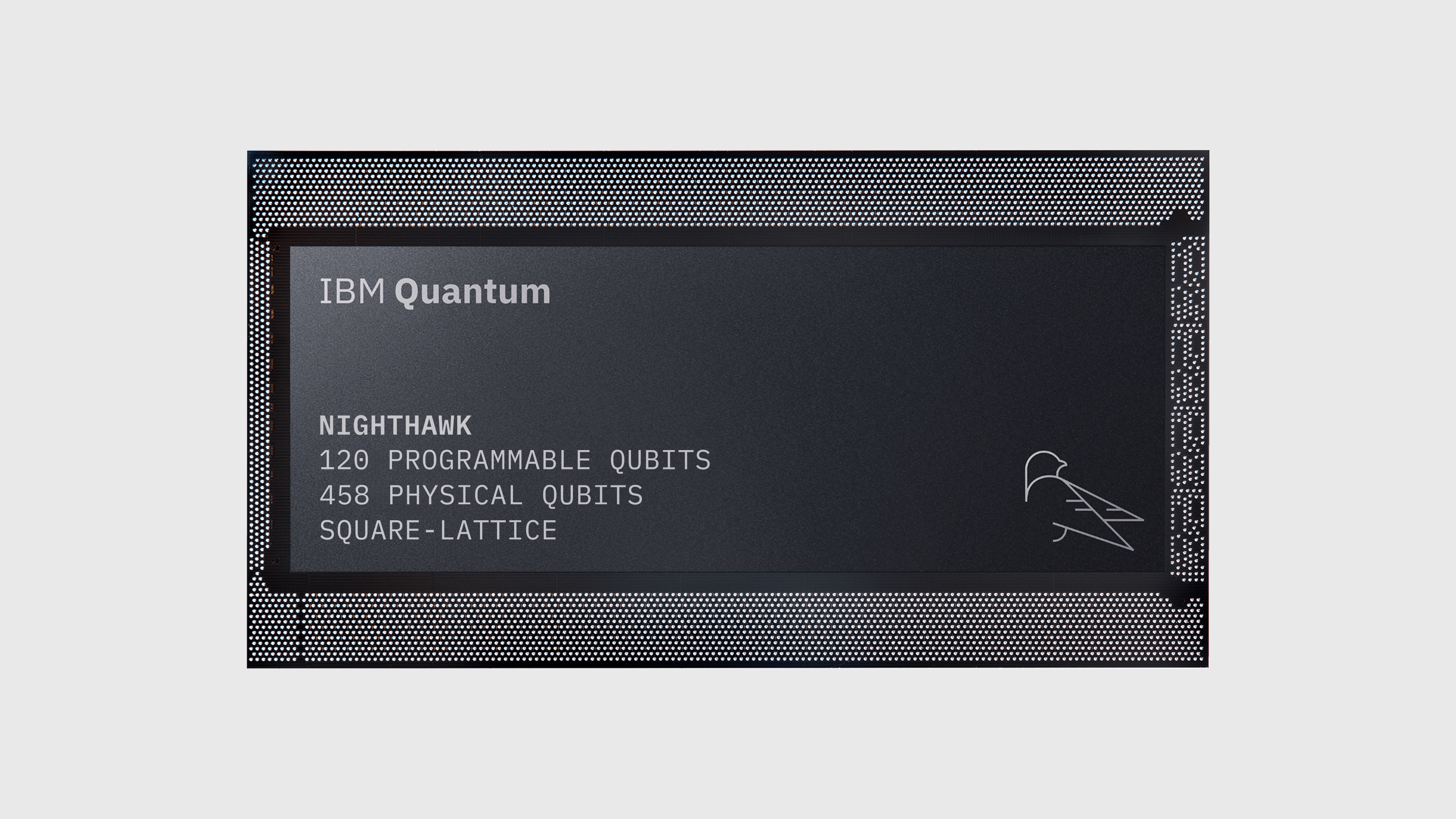
IBM Quantum Nighthawk r2, IBM's fastest quantum processor to date, is capable of executing more than 100,000 circuits per second.
To access the IBM Quantum Nighthawk r2 and other world-class quantum systems, visit IBM Quantum Platform. New users can create a free account and get started today. You can also learn more about Nighthawk r2 in our 10 Sept webinar. Register here.
Accelerating computations with independent, high-speed qubit reset
IBM Quantum Nighthawk r2 addresses a longstanding bottleneck in quantum computing: the time spent waiting for qubits to reset between circuit executions. Every quantum circuit begins with qubits prepared in a known state and ends with qubit measurement. Between executions, qubits must return to their ground state before the next shot can begin.
To achieve this in previous generations of IBM Quantum processors, including Heron, we rely on a technique powered by dynamic circuits called conditional reset: The processor measures the state of a qubit and, if it is found to be in the |1⟩ state, applies a bit flip gate (specifically a π-pulse) that flips the qubit back to the ground state.
However, conditional reset is limited by the fidelity of measurement and cannot reset qubits that have leaked outside the computational state. To ensure full reset, the system must sit idle for hundreds of microseconds between circuit executions.
Nighthawk r2 replaces conditional reset and idle time with a dissipative reset gadget. Each programmable qubit is linked through a high-dynamic-range tunable coupler to a cold environment that draws it back to its ground state on demand. Activating that coupler pulls a qubit’s effective T1—the measure of how long it holds its energy—from a median of about 200 microseconds down to roughly 25 nanoseconds, enabling significantly faster high-quality reset.
Crucially, this active qubit reset leaves neighboring qubits undisturbed while reducing idle time between circuit runs to as little as a single microsecond. The result is a dramatic increase in the amount of useful computation the system can perform over time. Nighthawk r2 can execute 100,000 circuits per second, a 25x speedup over Heron, which clocks in at roughly 4,000 circuits per second.
In practice, gains are most noticeable in the large-scale, repetitive workloads that are common in the research community. Early tests on advantage-candidate circuits already point to as much as 10x faster runtimes with no loss in accuracy.
Achieving this requires more controllable quantum elements than users ever program directly. Nighthawk r2’s 120 programmable qubits are supported by 218 dedicated couplers and 120 independent qubit reset elements—one paired with each programmable qubit—for a total of 458 physical quantum elements.
From an engineering perspective, these additional couplers and reset elements are virtually indistinguishable from programmable qubits, making Nighthawk r2 the most complex quantum processor IBM has ever put into production.
Boosting speed without compromising quality
Of course, even the fastest quantum processor offers little value if that speed comes at the cost of the fidelity required for useful, accurate computations.
Nighthawk r2 doesn’t just maintain the quality of its predecessor; it also introduces a key improvement: because the new high-speed reset capability actively cools the qubit to its ground state, it achieves around a 25x reduction in initialization error across the device. The mechanism is simple—cleaner starting states mean more accurate results.
Crucially, Nighthawk r2 realizes these gains without sacrificing performance elsewhere. It maintains Heron-class gate fidelity even while operating at much higher speeds, and performs individual qubit reset without degrading the performance of the qubit’s neighbors.
Neighbor-safe qubit reset is crucial for Nighthawk’s square-lattice architecture, in which most qubits are connected to four nearest neighbors—compared to just two or three in previous architectures—to enable greater complexity and efficiency in circuit design. The result is a processor that doesn’t just perform more quantum computation, but more useful quantum computation.
Quantum advantage and other early results on Nighthawk r2
Nighthawk r2’s improvements in speed and quality are already enabling exciting demonstrations of its quantum computational capability.
For example, following recent demonstrations of quantum advantage through trusted quantum computation, researchers used Nighthawk r2 to perform the doped Clifford sampling advantage experiments originally developed in a collaboration between UChicago and IBM.
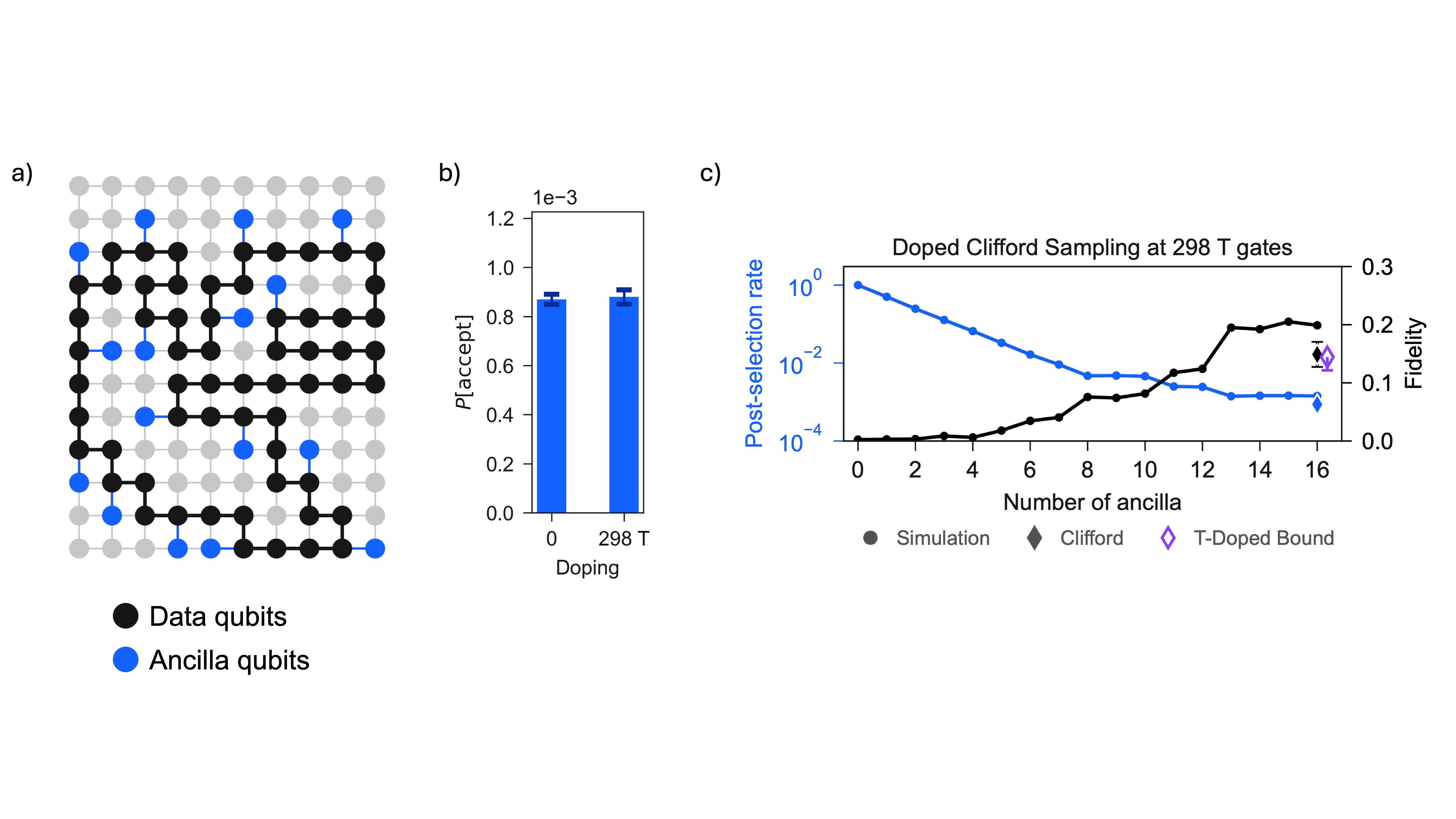
These experiments demonstrate how quantum codes can already be used on today’s quantum computers to perform computations beyond the reach of leading classical simulation methods while simultaneously providing trust that the computation was executed correctly. With Nighthawk r2’s increased connectivity relative to Heron processors, we expect to see even more demonstrations of quantum advantage across a broader range of circuits and problem classes.
Additionally, Nighthawk r2 has demonstrated accurate observable estimation using Probabilistic Error Amplification (PEA) on circuits containing 7,500 gates. This is an important milestone towards the reliable execution of increasingly complex quantum circuits, and a key target on the 2026 IBM Quantum Roadmap.
The benefits further extend to experiments directly exploring applications. In neutron-scattering simulations reported earlier this year, Nighthawk r2’s increased throughput enabled a 12x speedup, producing spectra that can be compared directly with experimental laboratory data in approximately 60 seconds.
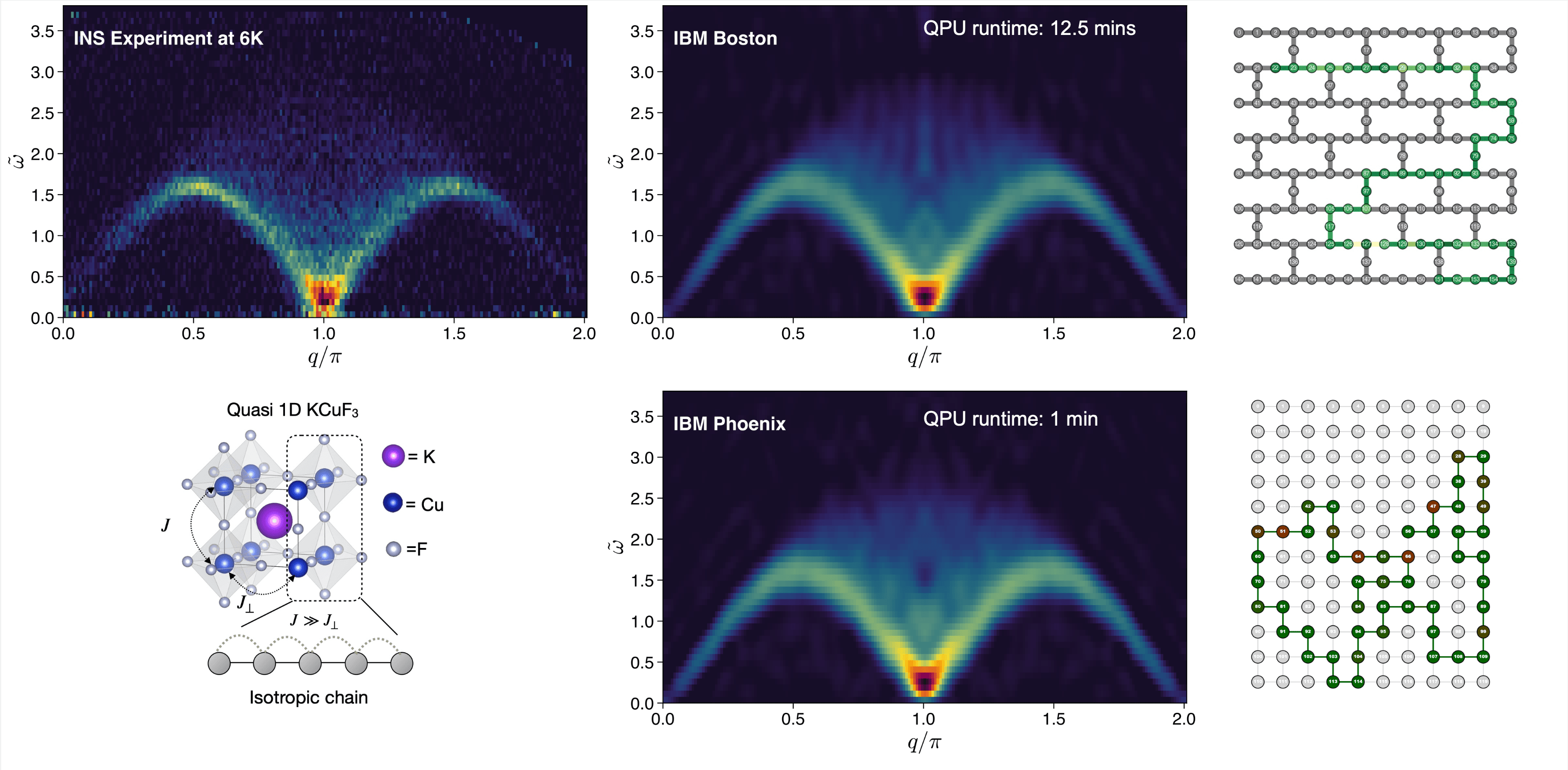
Together, these results show how advances in throughput and quality are translating into practical computational capability enabling demonstrations of quantum advantage, ticking off our roadmap, and accelerating the discovery of quantum applications.
Built for quantum error correction
Nighthawk r2’s new reset capability is available not only between circuits, but also during circuit execution. This brings enormous efficiency gains for dynamic circuits, an advanced capability that involves performing qubit measurements within the runtime of a single circuit execution.
Many quantum error correction protocols and advanced quantum-classical workflows require dynamic circuits, and reliable, independent reset across all programmable qubits makes Nighthawk r2 a powerful platform for conducting research in these areas.
The new reset capability enables the repeated use of auxiliary qubits during quantum error detection and quantum error correction protocols like space-time checks, providing additional flexibility for experiments that introduce logical qubits into workloads.1
In many ways this is a reflection of Nighthawk’s role in the IBM Quantum Roadmap. Originally introduced as a platform for exploring and scaling quantum advantage, it has now become a testbed for enhanced error-corrected operations.
Run circuits today
As quantum hardware matures, the challenge is no longer simply building bigger and better processors. It’s maximizing what researchers can accomplish with the systems that are already available. With its 120 programmable qubits and independent, high-speed qubit reset, Nighthawk r2 aims to free researchers from those limitations.
Greater circuit throughput means the new Nighthawk can run substantially more workloads within the same allocation. Estimates suggest users may realize much more usable computational capacity with Nighthawk r2, meaning they can spend less time managing quantum resources and more time discovering what those resources make possible.
The new Nighthawk r2 processor is available now on IBM Quantum Platform. Whether you’re scaling application research, exploring the power of dynamic circuits, or advancing the latest quantum error correction research, this new system will help you do more quantum computing, faster.
Ultimately, the most important thing about a quantum computer isn’t the number of qubits or components; it’s the amount of useful computation the system can deliver. As the industry evolves toward more sophisticated workloads and fault-tolerant computation, it is essential that we continue working to turn hardware innovation into practical capability. Head to IBM Quantum Platform to see what IBM Quantum Nighthawk r2 can do for your research.


