Building community-based resilience: Emergency preparedness and response case studies
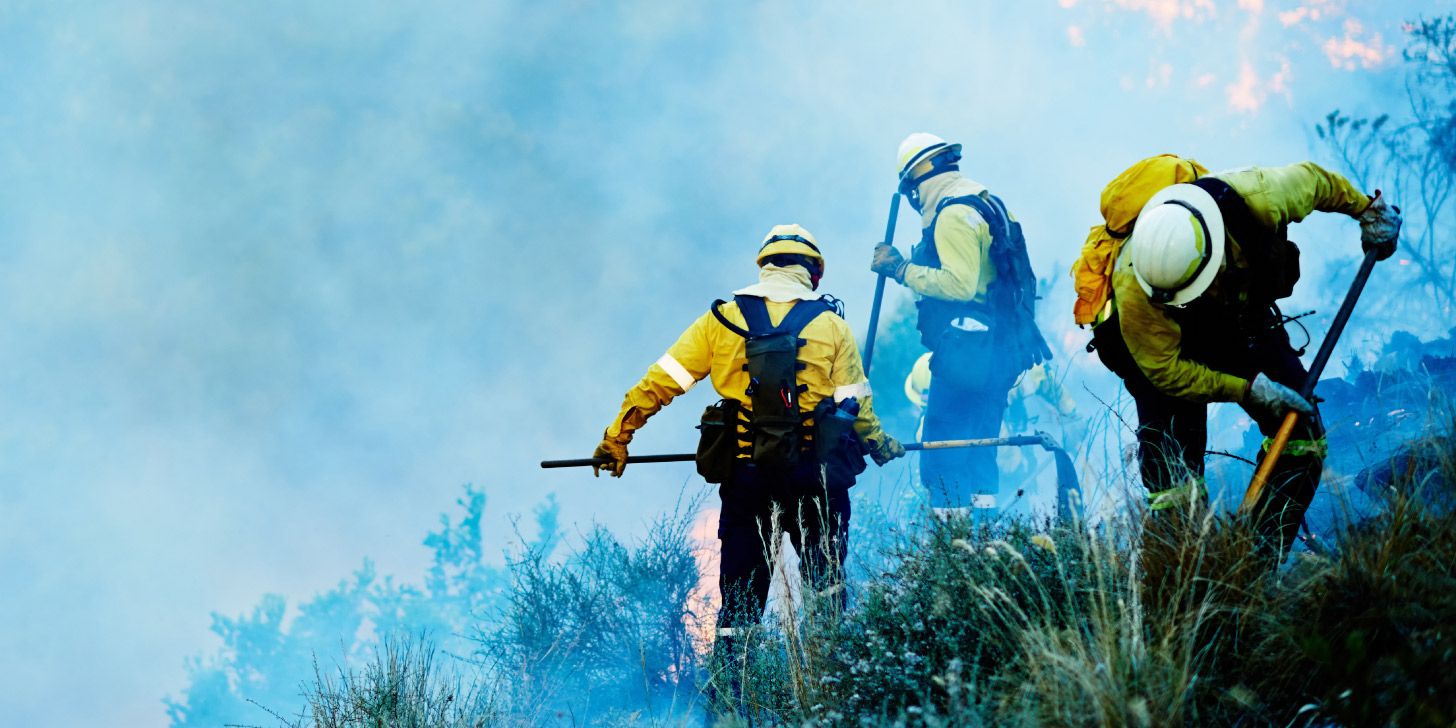


Disruptive, shock-level events are increasing in frequency, magnitude, and complexity. In recent years, governments worldwide have faced overlapping floods, wildfires, severe storms, infrastructure failures, and humanitarian emergencies. These events have arrived with little warning and have often cascaded across systems and borders, revealing the limits of traditional and centralized response models.
Governments need to develop new approaches to emergency preparedness and response to build community-based resilience—placing decision-making authority, critical resources, and actionable information as close as possible to the point of impact.
The lessons of recent years make one reality clear: the ability to anticipate and prepare for disruptions before they occur is just as critical as the capacity to respond and recover afterward.
How do the case studies in this report highlight new ways to position decision-making, resources, and information closer to the front lines?
- Community Brigades in fire-prone California.
These grassroots organizations demonstrate how training and equipping neighborhood-based teams can extend official firefighting capacity and strengthen public trust in emergency operations. - A Resilience Action Plan for hurricane-vulnerable Florida.
Online data viewers from the Florida Department of Transportation provide scenario planning tools and build transportation resilience. Standardized data help local agencies anticipate and mitigate infrastructure risks before they escalate. - A single platform to help small businesses in Texas recover from disruption.
Texas’s BeforeDuringAfter.com consolidates more than 10,000 local resources into a single platform to give small businesses and local governments clear, actionable guidance in the face of disruptions, such as floods and other emergencies. - A new first responder communication network across Great Britain.
To take advantage of advanced mobile technology and benefit from lower costs, the UK Home Office is replacing its current system with the Emergency Services Network (ESN). ESN integrates secure, resilient communications across police, fire, ambulance, and other responders, helping to ensure coordination when it matters most.
These examples demonstrate that resilience is not a passive trait but a deliberate strategy. By proactively embedding capability at multiple levels, investing in accessible information systems, and formalizing cross-sector partnerships, governments can have a greater likelihood of effectively managing uncertainty and addressing future events.
Safeguarding lives, sustaining essential services, and accelerating recovery rests on placing decision-making authority, critical resources, and actionable information at the point of impact.
What are practical steps that government leaders can take now to strengthen readiness, speed recovery, and save lives?
- Distribute operational impact at the point of impact.
Design systems where the people on the ground—local agencies, trained community groups, and infrastructure operators—are equipped and authorized to act decisively without delay. - Make actionable information universally accessible.
Commit to building systems where every responder—whether a public agency, private partner, or community volunteer—can access the same real-time, location-specific intelligence. This requires interoperable data platforms, open dashboards, and eliminating proprietary bottlenecks that slow the flow of vital information. - Build integrated networks that function under stress.
Cultivate partnerships across government, industry, and community sectors that can adapt and scale when the unexpected happens. These networks must be “always on” with established trust, shared objectives, and the ability to function even if traditional command structures are disrupted. - Institutionalize forward-looking, data-driven planning.
Integrate this approach into normal operations to help ensure that every major decision—whether on capital projects, land use, or public services—strengthens the system against future shocks, avoids locking in current vulnerabilities, and considers the lifecycle costs of major investments.
Download the report to learn how government leaders can build resilience at the community level, coordinate response more effectively, and reduce the human and economic toll of high-impact events.
Meet the authors
Imtiaz Mufti, Senior External Communications Lead, IBMShirley Feldmann-Jensen DPPD, MPH, Lecturer and Program Coordinator, Emergency Services Administration MS Program, California State University, Long Beach
Sara O’Connor, Ph.D., Associate Director, Geo-SpACE Lab and Geography Department Lecturer, California State University, Long Beach
Steven Jensen, DPPD, Professor, Emergency Response Services, California State University, Long Beach
Juliet Musso, Ph.D., Associate Professor of Public Policy and Management, University of Southern California
Brent Woodworth, CEO, Los Angeles Emergency Preparedness Foundation
Meiqing Li, Ph.D., AICP, Assistant Professor, School of Public Administration, University of Central Florida
Rebecca Davio, Director, Institute for Government Innovation (retired), Texas State University
Matthew Pantuso, Senior Grant Coordinator, Institute for Government Innovation, Texas State University
Originally published 31 October 2025