With WebSphere® Adapter for Lotus® Domino®, you can create modules that can exchange information with the Lotus Domino server. The adapter provides bidirectional exchange of business data between Service Component Architecture (SCA) applications and the Lotus Domino server. The business data can be Domino documents such as a calendar entry, to-do item, or a note.
The adapter enables two-way communication between an application running on IBM® Business Process Manager or WebSphere Enterprise Service Bus and a database. Using the adapter, an application can send requests to create, update, delete, or retrieve the documents in a database. The adapter has a built-in mechanism to support Enterprise Metadata Discovery (EMD), complex and rich text fields, and attachments in a document.
The adapter is imported and configured in a module that is created in your development environment and deployed to your application server or integration broker. After configuration, the adapter acts like a service provider in part of a service-oriented architecture (SOA) implementation and provides operations to retrieve or create documents in a Domino database. Client applications interact with the module instead of directly with the Lotus Domino server. This configuration gives the benefit of shielding the authentication details (such as user name and password) that you provide when you set up a module from the client applications and services outside of the module. The adapter exposes a service interface that hides the mechanics of how the data or operations are obtained or performed.
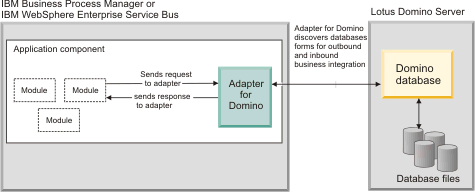
The adapter, which you generate with the external service wizard of Integration Designer, uses a standard interface and standard data objects. The adapter takes the standard data object sent by the application component and calls the Lotus Domino server. The adapter then returns a standard data object to the application component. The application component does not have to deal directly with the Lotus Domino server. It is the WebSphere Adapter for Lotus Domino that calls the function and returns the results.
The module that you create is a reusable unit designed to complete a specific inbound or outbound service. Each module uses a consistent interface and standard business objects, so applications consuming the service do not have to understand the lower-level details of the Lotus Domino server.