
Overview of a two-node Tivoli Storage Manager cluster using Tivoli System Automation
Use the Tivoli® System Automation cluster for higher server and database availability during a failure. By using the Tivoli System Automation failover function, server components such as the database can automatically recover from a failure.
The Tivoli Storage
Manager server
and the DB2® database are the
underlying server components for this two-node cluster. The server
is the core component. It is responsible for client and server activity.
The DB2 database is an internal
component, which is installed as part of the server. The server controls
all database activity such as startup and shutdown. When the server
detects a server or database component failure, it tries to restart
the database. If the restart fails, the server and database are automatically
shut down on the primary node and Tivoli System
Automation automatically
starts these components on the secondary node. Because the Tivoli Storage
Manager functions
are restored immediately, server and database availability is higher.
Figure 1. The failover function. The server and database components fail
on the primary node. Tivoli System
Automation starts
these components on the secondary node.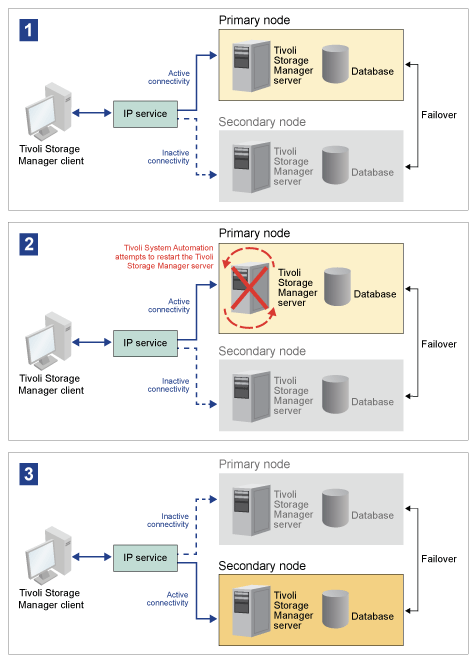
The server and the database include the following log directories,
which are used for storage:
- Tivoli Storage Manager instance directory
- Active log directory
- Archive log directory
- Database directory
Figure 2. Multiple Tivoli Storage
Manager server instances
on separate nodes. These server instances are on separate physical
systems. These instances can access the highly available shared storage.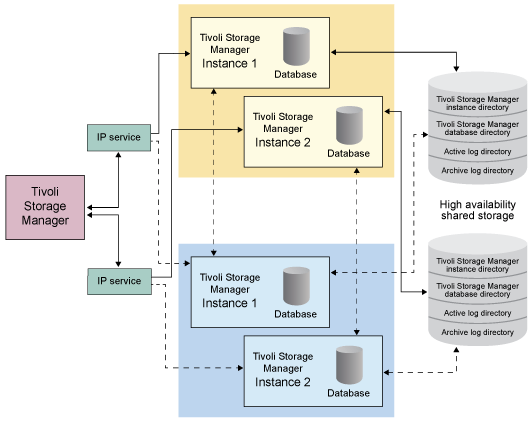
- Two-node shared disk topology
This cluster uses a two-node shared disk topology. It includes a primary and secondary node. The primary node hosts the Tivoli Storage Manager server, database, Tivoli Storage Manager instance, and the data. The secondary node is where the Tivoli Storage Manager resources are moved to if a failure occurs. - Tivoli System Automation resource groups
Use Tivoli System Automation resources groups with defined automation policies to manage the Tivoli Storage Manager components for this cluster. The only exception is the database server instance resource that is managed by the Tivoli Storage Manager server.