IBM Integration Bus provides a universal integration capability which addresses a wide range of integration scenarios including web services (SOAP and REST), messaging, database, file, ERP systems, mobile, physical devices, email, custom systems and more.
An integration bus is a collection of integration nodes. An integration node can be a broker, for example, or a WebSphere Application Server node. This concept is reflected in the names of various resources; for example, the name of the default broker in IBM Integration Bus Version 9.0 is IB9NODE.
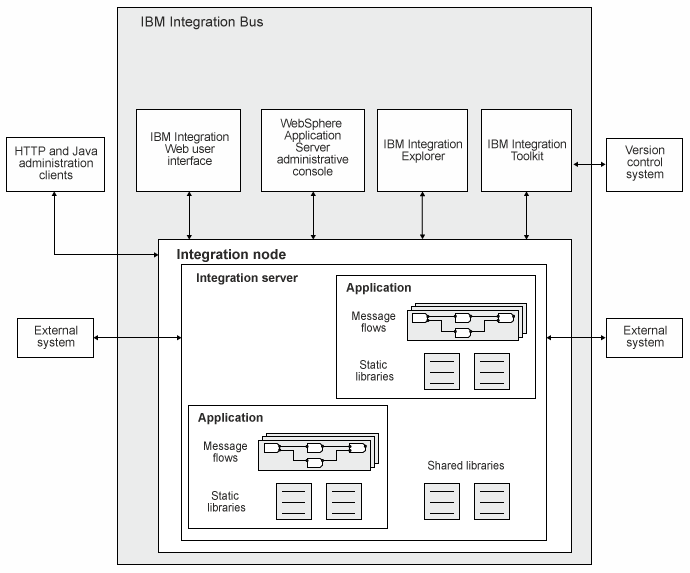
The following diagram illustrates the architecture of IBM Integration Bus Version 9.0.
The following table lists the resource names that have changed
in IBM Integration Bus Version 9.0.
For a summary of the features that are new to IBM Integration Bus Version 9.0, see What's new in Version 9.0?.
| IBM Integration Bus terms | WebSphere Message Broker terms |
|---|---|
| IBM Integration Toolkit | WebSphere Message Broker Toolkit |
| IBM Integration Explorer | WebSphere Message Broker Explorer |
| IBM Integration Administration for WebSphere Application Server | WebSphere Message Broker Administration for WebSphere Application Server |
| IBM Integration web user interface | WebSphere Message Broker web user interface |
| Integration node | Broker |
| Integration broker (shortened to broker) | Broker |
| Integration server | Execution group |
| Integration service | Service |
| Integration Bus component | Broker component |
| Integration API | Message Broker API |
| Integration Java™ API | Message Broker Java API |
| IB9NODE (default broker name) | MB8BROKER (default broker name) |
| IB9QMGR (default queue manager name) | MB8QMGR (default queue manager name) |
| Integration Development perspective | Broker Application Development perspective |
| Application Development view | Broker Development view |
| Integration Nodes view | Brokers view |
| Integration project | Message Broker project |
 Last updated Friday, 21 July 2017